 seolounge



A few months ago, one of our clients called at 8:10 in the morning. I remember because I hadn’t even finished my tea. He said, “We’re getting traffic. Proper traffic. But no one is buying.” There was a pause after that. The kind where you can hear someone scrolling through reports on the other end.
That gap, between someone reading and someone actually paying, is where content marketing either connects properly inside a marketing funnel or just floats around as disconnected pieces.
We see this often with businesses in India and the United Kingdom. Blogs are published. Social posts are scheduled. Maybe even ads are running. But the sales funnel underneath it all hasn’t been stitched together properly. So traffic comes in… and then nothing much happens.
You can almost feel the disconnect when you trace it step by step.
Awareness: Where Someone First Notices You
Awareness isn’t a theory. It’s a real moment.
It’s a founder in Leeds searching “why are my leads low quality” before heading into a team meeting. It’s a business owner in Chennai scrolling LinkedIn late at night, pausing because a post sounds exactly like their current frustration.
At the top of the sales funnel, awareness content needs to speak to that exact situation. Not broad industry talk. Not polished statements. Specific things.
We once reviewed a blog for a logistics client that discussed “optimising enterprise systems”. It sounded impressive but vague. We rewrote it to describe the awkwardness of chasing enquiries that never convert. The bounce rate dropped. Time on page increased. Not dramatically overnight. Just noticeably.
Awareness-stage content marketing usually includes:
- SEO blogs built around real search intent
- Social posts addressing lived business problems
- Resource guides answering one sharp question
- Optimised service pages aligned with queries
If awareness content doesn’t match the reader’s actual experience, they leave. No big decision. Just a quiet click.
The Middle: Lead Nurturing Content That Feels Connected
Someone downloads a checklist. Subscribes to a mailing list. Fills out a small form.
Now the middle of the marketing funnel begins.
This is where lead nurturing content either builds trust slowly or disappears into generic messaging. We’ve seen inboxes where leads received one email and then silence. We’ve also seen long email sequences that felt mechanical, like they were written without remembering what the person signed up for.
A UK-based service client once had a three-email sequence that jumped from introduction to pricing immediately. No context. No explanation. Prospects stopped responding.
We mapped the journey properly instead. Awareness blog → downloadable guide → three emails explaining process and expectations → invitation to book a call.
It wasn’t flashy. It just made sense in sequence.
Lead nurturing content should feel like a continuation of what someone already read. If the awareness blog talked about poor enquiry quality, the next email should explore filtering and qualification,not shift into unrelated brand promotion.
You notice the difference when sales calls begin with, “I read your email about onboarding…”
Email Marketing Content That Doesn’t Push Too Hard
There’s a certain tone in email marketing content that makes people unsubscribe quickly. Overly excited subject lines. Urgency that feels artificial. Too many promises in one message.Inside a functioning sales funnel, email marketing content behaves differently. It answers one question at a time.
We worked with an Indian SaaS company that kept losing prospects after demos. When we looked at their funnel, there was no email addressing implementation worries. So we created one focused entirely on the first two weeks after sign-up. What happens? Who contacts you. What support looks like.
That single email reduced hesitation noticeably.
Email content inside a marketing funnel should:
- Follow directly from previous engagement
- Address objections before they’re voiced
- Share proof without sounding defensive
- Lead gently towards the next step
When email marketing content feels aligned with earlier stages, it doesn’t need to shout.
Landing Page Content: The Decision Point
Traffic arrives. Emails are opened. Links are clicked. Eventually, someone lands on a page where they have to decide.
This is where landing page content matters more than design flourishes.
We’ve seen beautifully designed pages that convert poorly because they talk about everything except the reader’s actual concern. Broad promises. Minimal clarity.
For a UK client, we replaced generic statements like “We help businesses grow online” with direct explanations of what happens after form submission. Who calls. What gets discussed. How long it takes. Conversion rates improved. Slowly, but clearly.
Landing page content inside a marketing funnel should feel like a continuation of the same conversation that began at awareness. If the tone shifts abruptly, visitors hesitate.
When the Funnel Feels Disconnected
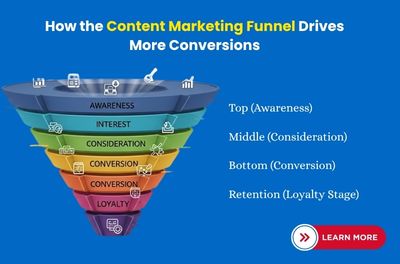
The marketing funnel is often drawn neatly in presentations. Awareness at the top. Conversion at the bottom. Arrows guiding the path.
In reality, someone might:
- Read a blog post
- Leave
- Return through a LinkedIn post days later
- Open two emails but ignore one
- Visit the landing page twice before enquiring
It’s not tidy. It’s layered.
Conclusion: Turning Content Into a Connected Conversion Path
Content marketing funnel only works when each stage is aware of the other stages. Awareness content should anticipate nurturing. Lead nurturing content should prepare for landing pages. Email marketing content should reinforce what was introduced earlier.
When everything connects properly, the difference shows up quietly. Enquiries reference specific articles. Prospects mention emails. Sales calls begin halfway through the conversation because the groundwork was already laid through the funnel.
For those wanting a structured breakdown of funnel stages, HubSpot’s marketing funnel guide explains the framework clearly. But diagrams alone don’t fix disconnected content.
The real shift happens when awareness, lead nurturing content, email marketing content, and landing page content stop operating separately and begin functioning as one continuous path.
That’s the part businesses across India and the United Kingdom often realise after looking closely at where their enquiries drop off.And that’s exactly where Lakhtech Solutions steps in,not just to create content, but to connect every stage of the funnel so it actually moves from awareness to conversion.